Announcing CMOS Companion
The AI Workflow That Puts Writers in Charge

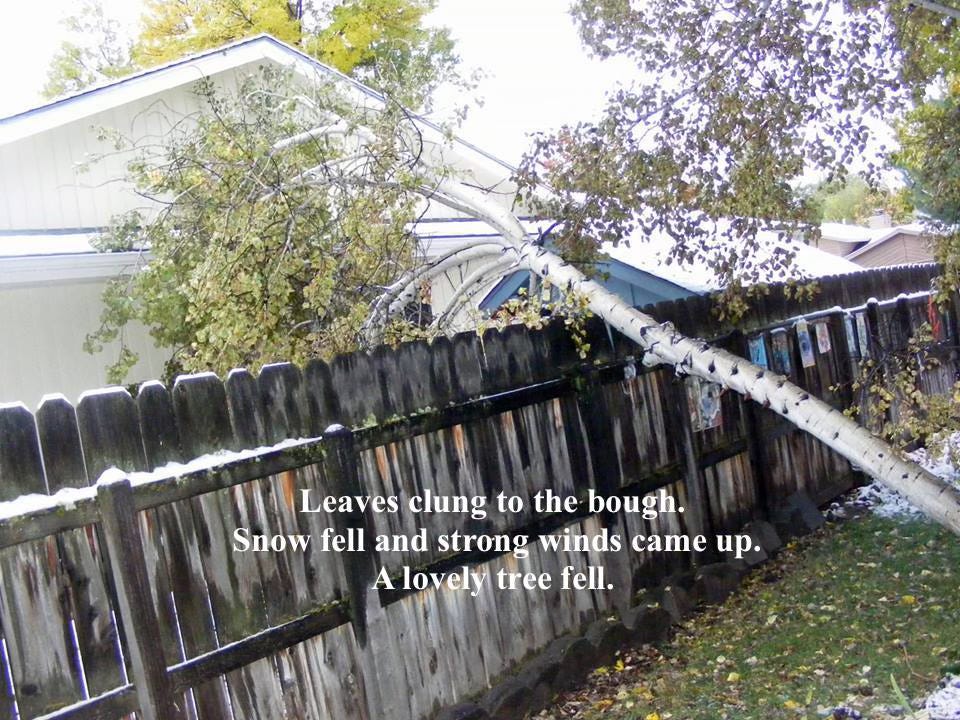
A haiku for a wind-broken tree.
A series of thunderstorms left downed trees and broken branches all over Chicagoland recently. That didn’t inspire me to write anything new, so I dug out a haiku I published on October 5, 2018 when I lived in Bozeman.
Announcing CMOS Companion: The AI Workflow That Puts Writers in Charge
I had hoped to announce today the launch of a seamless, intelligent workflow that helps writers transform their drafts into CMOS-compliant manuscripts—without sacrificing control or voice. The vision was simple: combine the deep editorial wisdom of The Chicago Manual of Style with the raw processing power of large language models to ease the burden of stylistic conformity.
After weeks of wrangling with an AI idiot savant (Google’s Gemini, in this case), I’ve come close to success. I’ve developed two workflows—Gemini calls them “Gems”—that analyze submitted text, highlight sections that violate CMOS guidelines, and suggest revisions. At each flagged section, the writer has three options:
Keep the original text
Accept the suggested revision
Engage Gemini in a discussion until a better solution is found
The two Gems are:
CMOS-Formal: for formal documents like government reports and academic papers
CMOS-Informal: for informal writing like fiction and memoir
How It Works
Gemini struggles with moderately long texts, so drafts must be submitted in chunks of 1,500 words or fewer. It processes each chunk individually, prompts the user to make changes, and then reassembles the full manuscript at the end. You’ll receive a complete version to copy and save, along with a report detailing all identified issues and how they were resolved. I've tested it on chapters from my own works that run up to 4,000 words. I recommend that you keep your submissions about that length, although longer submissions might be okay.
Each Gem automatically fixes simple mechanical errors—such as spelling, grammar, and word spacing—without requiring any user input. That cleanup happens quietly in the background, so you can focus on higher-level decisions.
Gemini also doesn’t handle paragraph delimiters well. I couldn’t get it to use tab indentations consistently, so I standardized on blank lines between paragraphs. It’s not standard manuscript form, but it’s easily changed.
There were dozens of other quirks I had to work around, but most of the fixes should be invisible to the user.
What to Expect
Honestly, these limitations aren’t surprising. Asking an AI to check your writing against a thousand-page style guide while comparing it to a massive language corpus is no small feat. Gemini is, in essence, an idiot savant: brilliant at processing billions of words, but clumsy with even modest workflows.
If that description offends anyone, they’re welcome to avoid using these Gems. After all, they’re being offered for free.
I’ve tested both workflows on my own memoir chapters, and they seem to work well. That said, using them requires diligence. Gemini can make mistakes—like missing paragraph delimiters. If you spot issues, you can ask Gemini to reformat the output with blank-line delimiters, and it will comply instantly. If other errors appear, sometimes the best fix is to discard the results and try again. Usually, that solves the problem.
Try It Yourself
To try a Gem, open Gemini and paste in one of the following commands: “Begin CMOS-Formal” “Begin CMOS-Informal” Then follow the prompts to generate a CMOS-compliant version of your work.
Who Else Can Benefit?
While CMOS Companion was designed with writers in mind, its utility extends far beyond the drafting desk. Editors, publishers, and educators will find it a powerful ally in streamlining manuscript preparation and ensuring stylistic consistency.
Editors can use the workflows to quickly flag CMOS violations and collaborate with authors on revisions—without manually combing through every line.
Publishers can standardize submissions before they hit production, saving time and reducing formatting errors.
Educators can introduce students to professional style standards in a hands-on, interactive way.
Whether you're polishing a novel, prepping an academic journal, or teaching the next generation of storytellers, CMOS Companion offers a flexible, intelligent workflow that puts clarity and control front and center.
Why I Built CMOS Companion
I’m a writer who spent several weeks working hard to develop CMOS Companion. I did so for several reasons:
I wanted tools I could use with my own work.
I wanted to share the benefits of my efforts with others—so they can focus on creative endeavors rather than commercial concerns. Others have helped me along the way; I want to return the favor.
I know AI is here to stay, and writers must embrace it if they’re to have a future.
I want to be part of the adventure—it’s going to be a fun ride.
A Note on Focus
As much as I’ve enjoyed building CMOS Companion, I’m aching to get back to my writing. This project was born out of necessity and curiosity—not a desire to become a full-time developer. My hope is that it helps others enough that I can step back, return to my own creative work, and let the tool grow through community input and collaboration.
If you find value in CMOS Companion and want to help test, improve, or promote it, I’d be grateful. The more support it gets, the more time I can spend doing what I love—writing.
Licensing & Public Use
CMOS Companion is offered freely to the public under a Creative Commons Attribution-NonCommercial 4.0 International License. You are welcome to use, share, and adapt the workflows for non-commercial purposes, provided you credit the original source.
In plain terms: You can use this tool to improve your writing, share it with others, and build on it—just don’t sell it, repackage it, or claim it as your own.
My goal is to keep CMOS Companion accessible to all writers, editors, and educators, regardless of background or budget. If you’d like to use it in a commercial context (e.g., as part of a paid service or product), please reach out for permission. I’m open to collaboration, but committed to protecting the spirit of open access.
Let’s Build a Community
I’m considering creating a space where users can share tips, report quirks, and suggest improvements. If that sounds useful to you, let me know in the comments or reply to this post. A community of curious, creative minds could take CMOS Companion further than I ever could alone.
Beta Testers Welcome
This is an early version of CMOS Companion. It’s functional, but not flawless. If you’re willing to test it and share your experience, you’ll be helping shape its future—and I’ll be grateful for every insight.
Use It Your Way
Use it to polish your novel before querying agents. Use it to prep your thesis for submission. Use it to clean up your blog posts before publishing. CMOS Companion is flexible enough to support whatever you’re writing.
AI Should Serve Writers
I believe AI should serve writers, not replace them. CMOS Companion is designed to support your voice, not overwrite it. You stay in control of every decision.
Looking Ahead
Eventually, I’d love to see CMOS Companion evolve into a standalone app or plugin. For now, it’s a set of workflows—but the potential is there, and I’m open to ideas.
Stay Tuned for Updates
I plan to release updated versions of these workflows as I refine them further. All future announcements and improvements will be shared exclusively here on Substack. If you're interested in following the evolution of CMOS Companion—or want early access to new features—make sure you're subscribed.
I’d Love Your Feedback
If it works, I’d love to hear about your experience. If it doesn’t, I’d love to hear about that too—and I’ll do my best to make it right.
From My Archives
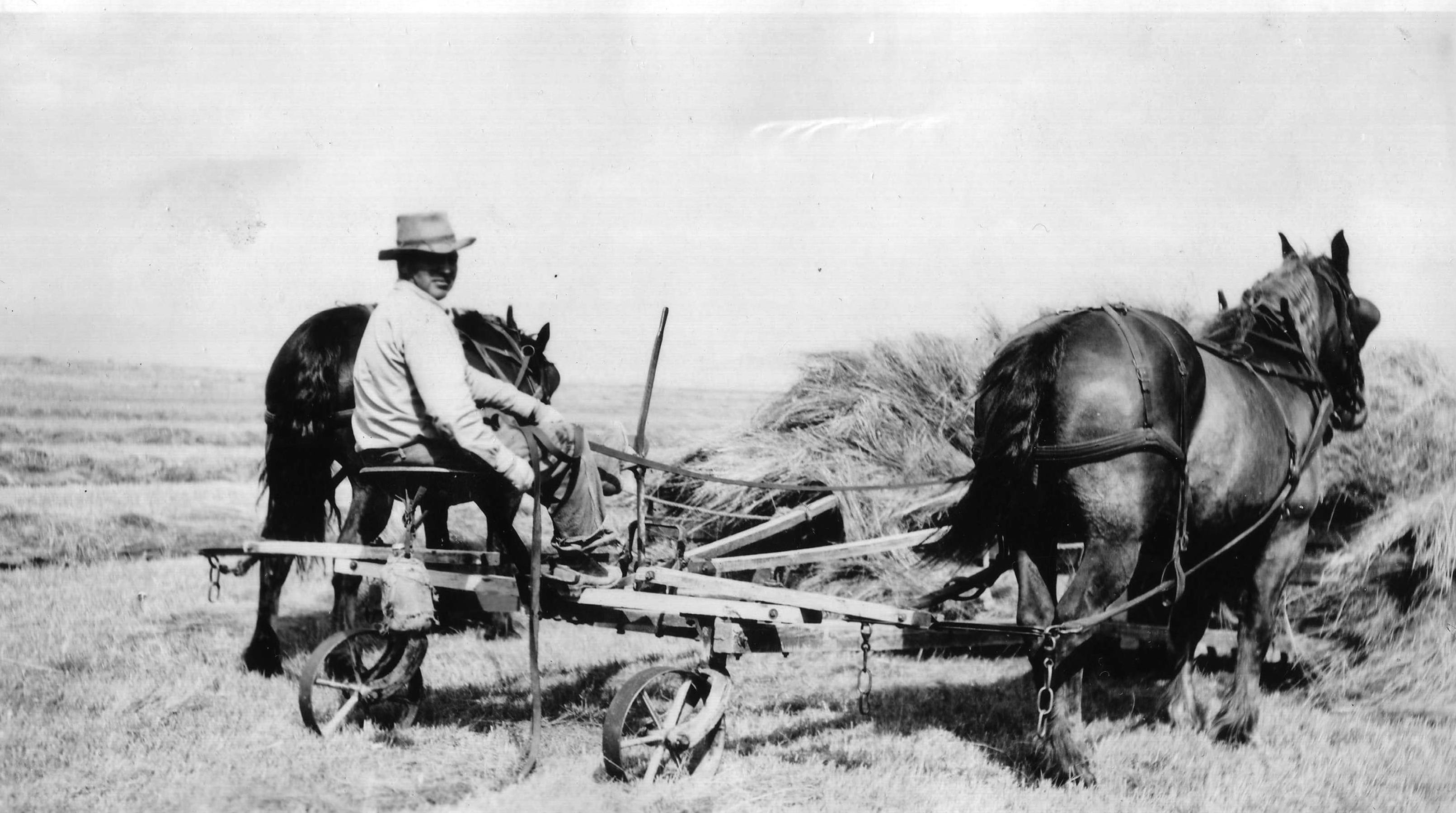
Making Hay — Published in Big Sky Journal August 2008


One summer afternoon in 1968, I rolled into Twin Bridges after an overnight drive from Salt Lake City and pulled into the gas station for fill-up before heading to the ranch. The station owner came out of the service bay wiping grease from his hands. (Back then you didn’t have to pump your own gas.) He was the father of one of my high school classmates and I greeted him by name.
“When did you get back in God’s country/?” he asked.
“About thirty seconds ago.”
“Seen your brother, Chuck, yet?” he asked while starting the gas flowing. “He was in a helluva fight last night.”
“Oh,” I replied. There was no reason to pry. He was a garrulous man so I knew a story was coming.
“He was havin’ a beer at the Blue Anchor when some joker out of Butte came in lookin’ for a fight. Chuck said he wasn’t interested, but the guy kept pushing. The guy finally said something that riled him – a comment about your mother, maybe. Anyway, Chuck grabbed the guy by the shirt and marched him out to the alley.
“The guy’d take a swing and Chuck would pound on him for a while. All the time Chuck’s partners were circling around hopin’ the Butte guy’s friends would try to step in to help him.
“Every once in a while Chuck would remind the guy that he’s really left handed. You should ask him about it. He’s having’ a beer at the Mint now.”
I paid for the gas and headed next door to the Mint. The Butte guy must have been crazy, I thought. Chuck and his partners were contract bale stackers that summer. Lifting sixty-pound hay bales ten hours a day for weeks on end makes a man enormously strong.
I went through the swinging doors at the Mint and saw a row of men sitting on stools along the bar. It was easy to spot the bale stackers. They were the ones with the sleeves torn off their denim shirts and muscles rippling under their god-bronze tans. It was easy to spot my brother, too. He was the tallest man in the room. When I walked up to say hello, he looked me up and down slowly. He wasn’t admiring my tie-dyed t-shirt and sandals. He slid off his bar stool and walked me along the bar.
“This is my brother,” he announced as we paused to greet each man. Despite my hippy hair and beard, I couldn’t have been safer in the arms of Jesus.
That summer the era of contract bale stackers was ending. Chuck was part of a three-man crew that used bale sweeps attached to forks on the front of tractors. While two men drove around the fields sweeping up bales onto forks that used hydraulics to lift them to the top of the stack, the third man arranged the bales. The men traded off regularly to keep a fresh man on the stack. Hard work to be sure, but not as grueling as the approach it replaced.
The heyday of the contract bale stackers began in the fifties when two-man crews skidded through fields on hay sleds – board platforms built on runners made of lodge pole pines. The sleds stood about eight inches off the ground so one man could gather bales while the other drove their tractor
The Paige brothers of Twin Bridges probably stacked more bales than any crew in history. Ron Paige, a burly man now in his 70s, says he has stacked more than two million bales. Paige says he started contract stacking in the 1950s when his younger brother, Duane, was in his early teens. At first, Ron did most of the heavy work picking up bales in the field and arranging them on the stack. But as Duane grew, he took a more equal share of the work – and developed into a powerful man. In his teens he put the shot 52 feet, 6 inches for a record that has stood at Twin Bridges High School for more than 50 years.
The Paige brothers routinely stacked 2,000 bales a day and on their best day, more than 3,500. “We could have stacked more that day,” Ron says, “but we ran out of hay.” They were paid five cents a bale – so each of the brothers made more than $350 in today’s money. In the fall of 1958 Duane drove back to college in a brand new Chevy Bel-Air that he paid for with his summer earnings and still had plenty of money for expenses.
Montana ranchers didn’t like paying young men that much and soon agricultural engineers came to their rescue. Their first invention was a machine that gathered the bales and tipped them onto stacks. Such devices are still used, but they weren’t the only solution.
Another solution was machines that made round bales that could weigh a thousand pounds and other machines to stack them. Round bales not only eliminated the hand labor of haymaking, they also slashed the work of feeding in winter.
When I visited the ranch last Thanksgiving, my brother asked if I’d like to help him feed his cattle. The invitation conjured memories of going out to feed with my father when I was a little kid. I would sit in the cab while my father loaded the big truck with hay. After we drove to the waiting cattle, he would set a hand throttle and tell me to get behind the steering wheel. Then he’d climb into the truck and unload the hay with a pitchfork.
I felt mighty important kneeling on the seat with the steering wheel grasped tightly. It never occurred to me that on days I elected to stay home he just let the truck inch along with an empty cab.
It took Dad most of a winter morning to feed his cattle, but last year my brother fed twice as many in half the time. He picked up one bale with the grab fork on the front end of his giant tractor and stabbed another with a spike on the rear end. When we reached the cattle, he dismounted to cut the twine and unrolled the bales with a push from the tractor. Slashing twine and picking it up was the only hand labor involved.
I’ve tried to picture what haying was like when my great great uncle started his Excelsior Ranch near Twin Bridges in 1868. He probably didn’t put up much hay – just enough to feed his milk cows and prize bulls. Back then ranchers let their cattle fend for themselves in winter. In fact, the Montana cattle business began in the southwest river valleys because cattle could fatten there on grass in winter.
In the 1850s men’s hat fashions switched from beaver to silk forcing fur trappers to look for new jobs. They discovered that emigrants on the Oregon Trial were abandoning oxen that became exhausted crossing the Rockies. The Mountain Men gathered the emaciated animals and drove them to the valleys in Southwest Montana where they could fatten up in the lush meadows. The next summer they drove the rejuvenated animals back south and traded them – two for one – with the next wave of emigrants.
By the time of the 1862 gold rush, the cattle industry had already taken root in Montana. And the miners were willing to pay in gold dust for beef from trail-toughened oxen. They were also ready to pay handsomely for hay to feed their horses.
In 1863, William Ennis bossed a train of freight wagons to Virginia City. After he sold his goods, he moved to the Madison Valley to the spot where founded the town that bears his name and put his teamsters to work making hay out of the knee-high grass. According to his biography in Progressive Men of Montana, Ennis sold that hay for the princely sum of $100 to $125 a ton.
A year later, William Wallace Curtis and his family arrived in the Gallatin Valley with a wagon train guided by the famous Mountain Man Jim Bridger. They had 25 cents among them so they immediately began cutting hay with scythes and raking it up with sticks. They too sold their hay in Virginia City, but by then the price had fallen to $40 a ton.
The earliest haymakers probably cut hay with a scythe, hand raked it, loaded it on wagons and stacked it with pitchforks. All these steps were backbreaking labor and motivated ranchers to find better ways.
High-wheeled wagons soon gave way to hay boats that hugged the ground a single set of low wheel in front and skids in the back. A lone man could load a hay boat while a wagon needed two. Soon sleds were equipped with nets so whole loads of hay could be hoisted onto stacks with derricks. Because every rancher built his own derrick, no two of them were the same. The simplest type was a two-pole derrick that ranchers used to hoist hay loads up between two uprights. They swung the loads over the stack and dumped them. Because ranchers couldn’t move the derricks easily, they hauled hay to them for long distances and built huge stacks. Another kind of stacker was the one-pole derrick, which had a boom that swung over the stack and dumped a load of hay. Operators of one-polers could place loads exactly where they wanted and cut the work of the men who arranged hay on the stack.
The overshot stacker came next. In his novel English Creek, Montana author Ivan Doig describes one this way:
An overshot stacker worked as its name suggests, tossing a load of hay up over a high wide framework, which served as a sort of scaffolding for the front of the haystack. If, say, you hold your arms straight out in front of you, with your hands clutching each end of a basket with hay piled in it; now bring your arms and the basket straight up over your head with a little speed and you are tossing the hay exactly as the overshot does.
Doig describes how the overshot operator can manipulate the placement of loads of hay by adjusting the speed of the horses or tractors that pull the overshot. A good operator could win the gratitude of the stackman who arranged hay with a pitchfork — or bury him under a misplaced load.
Bales have replaced loose hay in most places, but in the Big Hole and Deer Lodge valleys huge loose stacks still dot the landscape. Nearly all those stacks are built with beaver slides. A patent was issued in 1910 for the “Beaverhead County Slide Stacker.” which was named for the place where it was invented. Soon the name was shorted to “beaver slide.” In fact, many people think the name comes from the dam building rodents who entertain themselves by sliding down mud-slicked paths. A beaver slide is just a ramp with a giant hayfork that slides up and dumps its load. In the olden days, it took a lot of horses to hay so the first task was to catch draft horses that probably had been running loose on pasture for eight or nine months. Half wild horses could make for a dangerous job particularly for mowing.
Horse-drawn mowing machines had five-foot cutter bars where three inch steel triangles reciprocated a thousand times a minute across guards with serrated blade. They could not only scissor down grass, they could cut the legs off birds, rabbits and skunks – and mangle people who fell into them.
Montana author Mary Clearman Bleu writes about her Aunt Imogene’s mowing machine accident in her book, Writing Her Own Life:
The sorrel colts were beautiful and fast, but they were half broken, and that day they spooked, perhaps at their own shadows, and ran away with the mowing machine. Somehow she was thrown off the high seat of the mower and into the razor-sharp sickle bar. It was one of those moments in a life when all that has seemed placid and dull is suddenly altered beyond imagination. In an instant the sickle bar had slashed through Imogene’s right ankle, cutting flesh and tendons to the bone.
Raking hay could be dangerous too. Dump rakes were simply 10-foot axles on iron wheels five feet in diameter. Long curved tines combed up the hay. When the tines filled, a driver stepped on a pedal to lock the axle and lift the tines to dumping the load. Rakers circled the field dumping the hay when the rake filled up, every 50 to 100 feet.
Raking hay is easy task so the wildest horses were allocated to it. Such horses might run for no reason at all, and when they did, the rider could be thrown off and caught in the tines. Ray Michener, who wrote a reminiscence of his haying experiences for the Bozeman Pioneer Museum, described the experience this way:
You would get rolled around and around until the rake hit a bump or a ditch that caused it to dump. …. I developed a procedure for when my team ran. I would just turn over backwards and fall off. I would keep a hold of both lines if I could, one for sure. It worked real well. You were glad to take a backward tumble rather than be rolled.
After raking was done, the hay had to be hauled to the stack. At first this done by pitching hay onto a wagon but they soon were replaced by hay boats that skidded on runners just inches of the ground. Then hayboats were replaced by buckrakes or bullrakes. As the masculine names indicate, these devices are the macho machines of the hayfield.
A buckrake was a sort of front-end loader with a fork about 12 feet wide made out of poles 10 feet long. It was designed to load hay on the fork and push it to the stacker.
Two horses working about eight feet apart propelled the buckrake. The driver steered it in an odd way — by speeding up or slowing down one of the horses. The fork would turn toward the slower horse while the driver, who rode at the back of the machine over a set of “crazy wheels” would swing the other way. If the buckrake turned too fast, the driver could be sent sprawling.
Buckrake drivers would snake his rig up back and forth across a windrow to fill the fork with hay. When the fork was full he would dash across the field and push the load onto the stacker. Then the horses would have to back up leaving the hay to be lifted to the top of the stack. No wonder ranchers reserved their best horses for buckraking.
Horsepower began giving away to gasoline in the 1930s and the power buckrake was about then invented in the Big Hole Valley. Like its horse-drawn predecessor, it had fixed wheels in front and turning wheels in the rear. The power buckrake was built for speed and its unique way of turning could result in a wild ride.
When I was in junior high, I helped my father build a buckrake. First we stripped an old truck down to the essentials – wheels, steel frame and drive train. Then we turned the rear axel upside down and re-attached it. With this arrangement, when the transmission was in what would normally be called reverse it ran toward the wheels that let the machine turn and in what used to be the three forward gears, it ran toward the fixed wheels that powered it. We attached a seat facing the drive wheels and rigged the controls so it could be driven that direction. That was an intricate bit of engineering that required a lot of trial and error, but we got it built — the hotrod of the hayfield. It was years later before my father let me drive the buckrake, but when I got my chance it was just what I expected — the fastest, funnest farm implement ever.
I would weave up the windrows filling the fork. When the load was full, I would stomp on the gas. The un-muffled engine would roar and I’d careen across the field in a cloud of hay dust and dirt. I’d push the load onto the stacker, throw the transmission in reverse and turn around. Then jam it into a forward gear and roar back for another load, driving the way every teenager wants to drive — and earning praise if I could haul in hay fast enough to keep the stacker busy.
Buckrakers miss jags of hay in their pell-mell rush to keep the stackers busy. That’s where scatter rakers come in. If buckrakers are the cowboys of the hayfield, scatter rakers are the delicate damsels. They amble across the field gathering the dabs of dropped hay with a dump rake and drop it where the buckrake can grab it on the next pass.
Often scatter raking is assigned to the youngest member of the hay crew as a way to provide experience driving. I must have been about 12 when my father put me in the seat of a Farmall H and showed me the controls – steering wheel, hand throttle, gearshift, and a rope to dump the rake when it gathered a full load. He started the tractor rolling and stood on the drawbar while I meandered around the field raking up one bit of hay after another. When the rake filled, he told me to pull the rope and I neatly dumped a load. The next time the rake filled I dumped it without prompting and listened for paternal praise. But then I saw my father had walked away to run the stacker.
By the time I started haying, the stacker was a Farmhand, a front-end load that lifted a fork with buckrake load of hay onto a stack twenty feet tall. Watching my father run the Farmhand was like watching a martial arts master. With his left hand he operated the hydraulic controls – a set of levers that move the fork up and down, dumped it, or pushed the hay off the end of the fork. With his right hand he steered the tractor and shifted gears. With his feet he managed the clutch and left and right brakes that he used to turn the tractor on a dime. Often he had attention left over to manage a roll-your-own cigarette.
One summer when my father was recovering from wrist surgery, I became a Farmhand operator, but I never really mastered it. I could move fast enough to keep up with a mediocre buckraker, but my stacks were lopsided. And I had to stop work to have a cigarette — a tailor made.
Now when I see huge bales lying geometrically across hayfields, I think of how much haying has changed in my lifetime. When I see a beaver slide I remind myself that a hundred years ago it was a startling innovation. I wonder what haying will be like a hundred years from now.